Tarred
beaches, dead and dying wildlife, damaged fisheries,
contaminated water supplies. These are the short-term
effects of an oil spill. In the long-term, toxic
materials from oil can remain in the water and on the
land for many years. They can build up in the food chain
to lethal levels, and destroy or disrupt and area's
ecosystem (editors note: and worse yet, our health!).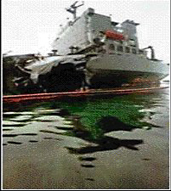
How
Oil Spills Occur: Petroleum is used as vehicle fuel,
lubricant, heating source for homes and industry, for
electricity generation, and as a feedstock for the
chemical industry. Because of the huge demand for oil,
enormous quantities are moved from production areas to
where the oil is used. Oil is pumped from the ground,
refined, transported and stored. There are many steps in
this process during which oil can spill from well heads,
drill rigs, tankers, pipelines and storage tanks. Oil
may leak from ocean-going ships during accidental and
deliberate spills. Spills can happen on land or water
when oil is incorrectly handled, there are railway or
truck accidents, tankers or barges collide, the insides
of tankers are washed, and when natural oil deposits
seep.
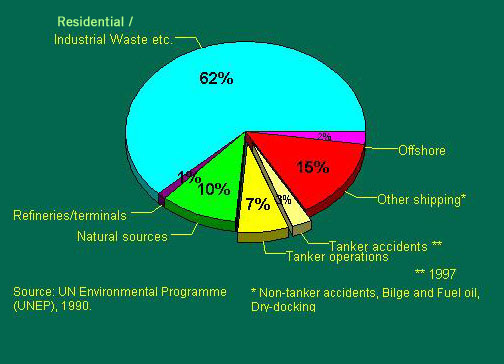
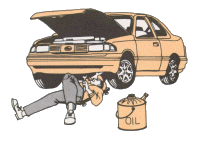
Sometimes when people change the oil in their vehicles,
they dump the used, dirty oil on the ground or down the
storm sewer. The rain carries the oil with polluting
particles from the engines into streams and creeks. If
you added up all the oil dumped on the ground in a year,
it would far surpass a serious oil tanker spill.
(editors note: see
www.bogfrog.com/mofr.htm for an innovative motor oil
and filter recycling program from The WATER Foundation)
Natural
Seepages: Not all spills are man-made. Crude
oil is made by the earth from decayed plants and animals
which lived millions of years ago. Oil has been in the
environment for a long time. Some oil lies below the
ocean floor and can seep into the ocean through cracks.
As much as 1.5 million barrels of oil may enter the
ocean from natural seeps each year. When these leaks
occur, as when spills occur, natural organisms and
chemical processes act to break down the oil over time.
This process is called natural bio remediation.
What
Happens When Oil Spills: When oil spills and
mixes with water it
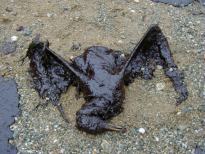 can
contaminate drinking water, kill fish and poison
wildlife. Just one quart of oil may pollute up to
1,000,000 gallons of water! Oil is harmful to shellfish,
finfish, marine mammals and waterfowl who live near the
spill. Oil spills are ugly and are expensive to clean
up. In addition, damage to fisheries places a hardship
on those who make their living by fishing. can
contaminate drinking water, kill fish and poison
wildlife. Just one quart of oil may pollute up to
1,000,000 gallons of water! Oil is harmful to shellfish,
finfish, marine mammals and waterfowl who live near the
spill. Oil spills are ugly and are expensive to clean
up. In addition, damage to fisheries places a hardship
on those who make their living by fishing.
When
oil enters the ocean it quickly begins to change and
disperse. Though oil is toxic, it becomes less so with
time. Winds and waves help spread and disperse the oil.
Some oil will evaporate. Some will form into tar balls
and sink to the bottom where they may remain for a long
time, slowly releasing hydrocarbons into the water.
Bacteria in the water attack and digest the oil. If
people act quickly after the spill, they can scoop up
some of the oil and stop it from causing worse damage to
the environment.
Effects
on the Food Chain: Each tier of the marine
food chain can be affected by an oil spill. Oil floating
on the water may contaminate plankton (very small,
swimming or floating plants and animals). When small
fish eat these plankton, they also eat the oil. Bigger
fish, bears and humans who eat these fish will ingest
oil too. Marine animals and birds can eat oil or it can
get on their fur and feathers. When oil gets on a bird's
feathers, the feathers lose their insulation capability
and the bird can't adjust its body temperature and dies.
Oil may obstruct the germination and growth of marine
plants.
Cleaning
Up Oil Spills: It is important to act fast to
clean up an oil spill and prevent the oil from spreading
to a bigger area. Spills can happen the open seas, close
to shores, or in lakes, streams and rivers. Spills on
land can contaminate groundwater or streams. How the
spill is cleaned up depends on where it happened. In
smaller bodies of water oil does not spread as much and
cleanup is easier.
Oil
floating on the surface can be held away from the shore
by booms and cleared with skimmers. Booms are barriers
that extend about three feet below the water surface.
They are anchored near the shoreline. Booms 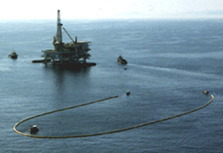 intercept
and contain the oil. Skimmers, such as vacuum machines
or oil absorbent plastic ropes, are placed inside the
boom to scoop up the oil. Booms and fences are often of
little use in the open seas. They cannot contain a spill
when there are big waves or strong currents. Once the
oil is whipped into a froth called a mousse, skimming is
difficult. Sometimes chemicals are used to speed the
disposal of the oil into small globules that are more
easily eaten by microorganisms. intercept
and contain the oil. Skimmers, such as vacuum machines
or oil absorbent plastic ropes, are placed inside the
boom to scoop up the oil. Booms and fences are often of
little use in the open seas. They cannot contain a spill
when there are big waves or strong currents. Once the
oil is whipped into a froth called a mousse, skimming is
difficult. Sometimes chemicals are used to speed the
disposal of the oil into small globules that are more
easily eaten by microorganisms.
When
oil reaches the shoreline, it can be cleaned in several
ways:
- Manual
pickup - hand tools are used to collect and bag oily
materials. This method improves the appearance of
the beaches.
- Tarmat
breakup / removal - tarmats, which are thick
asphalt-like coverings of oil, are slow to degrade,
can be broken with hand tools and then scattered or
collected.
- Tilling/raking
- Oil that is under the surface is exposed by using
a rake to turn over the topsoil. Raking or tilling
helps in natural degradation or bioremediation
(discussed below).
- Spot
washing - hand-held high pressure washing tools are
used to remove small accumulations of oil. The
runoff water is then collected.
Sometimes
these techniques cannot remove all the oil trapped under
rocks or in beach sediments. A technique called
bioremediation has worked to remove underlying oil.
Bioremediation involves covering the oiled area with
"fertilizers" that contain microorganisms,
like bacteria. These microorganisms speed the natural
degradation processes already at work. It is thought
that the more microorganisms at work, the faster the oil
will be removed. Bioremediation is less disruptive to
the environment than other techniques. It simply
improves on nature's own way of destroying oil.
Several
serious oil spills have brought attention to the damage
that can result from oil spills. Three spill are
discussed below.
The
Persian Gulf War: Although the war in the
Middle East in the early months of 1991 was brief, it
left behind a damaged environment. Huge quantities of
oil (2.5 to 4 million barrels) were dumped into the
Persian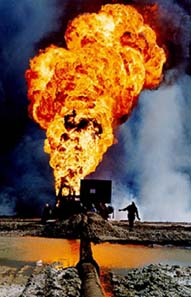 Gulf. It was the largest oil spill in history.
The oil may have destroyed or severely disrupted the
area's marine ecosystem. The oil covered some 600 square
miles of sea surface and blackened 300 miles of
coastline. The waters of the Gulf contain coral reefs,
mangrove swamps, and beds of sea grass and algae, as
well as birds, sea turtles, fish and marine mammals. All
these plants and animals were affected by the oil.
Mangrove swamps and other kinds of wetlands are very
sensitive to oil because their root systems are above
water and can become coated or clogged with oil. Gulf. It was the largest oil spill in history.
The oil may have destroyed or severely disrupted the
area's marine ecosystem. The oil covered some 600 square
miles of sea surface and blackened 300 miles of
coastline. The waters of the Gulf contain coral reefs,
mangrove swamps, and beds of sea grass and algae, as
well as birds, sea turtles, fish and marine mammals. All
these plants and animals were affected by the oil.
Mangrove swamps and other kinds of wetlands are very
sensitive to oil because their root systems are above
water and can become coated or clogged with oil.
Because
this oil spill happened during a time of war, clean-up
actions were delayed. Efforts were made to protect a few
delicate areas. If action could have been taken earlier,
less oil would have gotten into the water. Booms and
skimmers were set up and used to protect some areas.
People from all over the world went to the area to help
with the cleanup.
The
Exxon Valdez: The worst spill in U.S. history
occurred in March 1989 when the supertanker, Exxon
Valdez, ran aground in Prince William Sound, Alaska.
About 11 million gallons (260,000 barrels) of oil
spilled from the tanker. It spread out to 900 miles of
shoreline. This shoreline and neighboring islands are
home to deer, bears, seals, otters, whales, birds and
fish, and other plants and animals.
This
was the first large spill in an enclosed, cold body of
water. These conditions made clean-up very difficult.
The oil slick spread quickly. Chemical dispersants could
not be used because the seas were too calm for them to
be effective. Then high winds drove the oil into a
mousse. In the months following the spill, workers
collected more than 36,000 oiled birds and more than
1,000 sea otters. The number killed was several times
the number found. Some people say that it will be 20 to
70 years before the seabird population fully recovers.
Cleanup costs of this spill exceeded $2 billion. The
cleanup involved more than 10,000 people, several
hundred boats and aircraft, and special equipment.
The
Monongahela River Spill: About a million
gallons of oil accidentally spilled into the Monongahela
River in Western Pennsylvania when an above-ground oil
storage tank collapsed January 2, 1988. In a matter of
seconds, a 30 foot wave of heavy oil surged over
containment barriers and spilled into the river,
threatening the water supplies of more than a million
people living downriver. Swift action was necessary to
safeguard these water supplies. Thousands of feet of
booms were used to contain the oil as workers pumped it
into barges and tanker trucks. Even with this massive
cleanup effort, eight water suppliers in three states
were forced to shut their intake for a few days.
Oil
Spill Laws: Many governments have laws
regulating oil spills. In the United States, spills of
oil and other chemicals must be reported to the National
Response Center at 1-800-424-8802 so action can be taken
to contain the spill and clean it up to reduce
pollution. Many states and local governments have
similar laws.
We
may not know for years, if ever, how much damage oils
spills cause. Sometimes we don't know a lot about the
area where the spill occurred. This makes it hard to
know what affect the oil had. Finding ways to prevent
the spills from occurring is important. In the United
States, oil storage tanks are regulated to try to
prevent future leaks. The USEPA regulates Underground
Storage Tanks (USTs) and requires replacement of old
tanks, corrosion protection for new tanks and pipes, and
leak detection systems for tanks. After the Monongahela
spill, some governments, such as Pennsylvania, passed
laws requiring Aboveground Storage Tanks (ASTs) to be
inspected and built to modern technical standards to
reduce future leaks.
The
U.S. Congress enacted the Oil Pollution Act of 1990
which makes the Marine Spill Response Corporation (MSRC)
the official response group for oil spills from oil
tankers. The bill also requires that oil tankers have
double hulls by the year 2010. Although these double
hulls are expensive, it is believed they will keep oil
from escaping into the ocean. Some large oil companies
are now building ships with double hulls. The law also
provides money for quick response teams in the 10 U.S.
Coast Guard districts.
What
You Can Do:
It may seem like you cannot do anything to stop oil
spills. But you can. If you see an oil spill, report it
to the government as soon as possible. Less oil is used
when people conserve energy by driving
 smaller cars,
using public transportation or alternatively-fueled
vehicles or other ways of travel, like walking and
bicycling. Instead of dumping used car oil on the ground
or down a sewer, people can take the oil to certain
service stations to be disposed of properly or recycled.
If you change you own oil in you car, make sure you
place a container on the ground under the engine to
catch any spills. An old cookie sheet works well. Also,
people can conserve energy in their homes, too. smaller cars,
using public transportation or alternatively-fueled
vehicles or other ways of travel, like walking and
bicycling. Instead of dumping used car oil on the ground
or down a sewer, people can take the oil to certain
service stations to be disposed of properly or recycled.
If you change you own oil in you car, make sure you
place a container on the ground under the engine to
catch any spills. An old cookie sheet works well. Also,
people can conserve energy in their homes, too.
If
everyone used less oil, fewer tankers would sail the
seas. This could reduce the risk of oil spills.
This
Environmental Fact Sheet is one of a series produced by
the Air & Waste Management Association. The
Association also produces educational materials for
schools and the general public. For more information,
phone (412) 232-3444.
|